
Will AI steal my job?
Too lazy to read? Click here
Will AI steal my job?
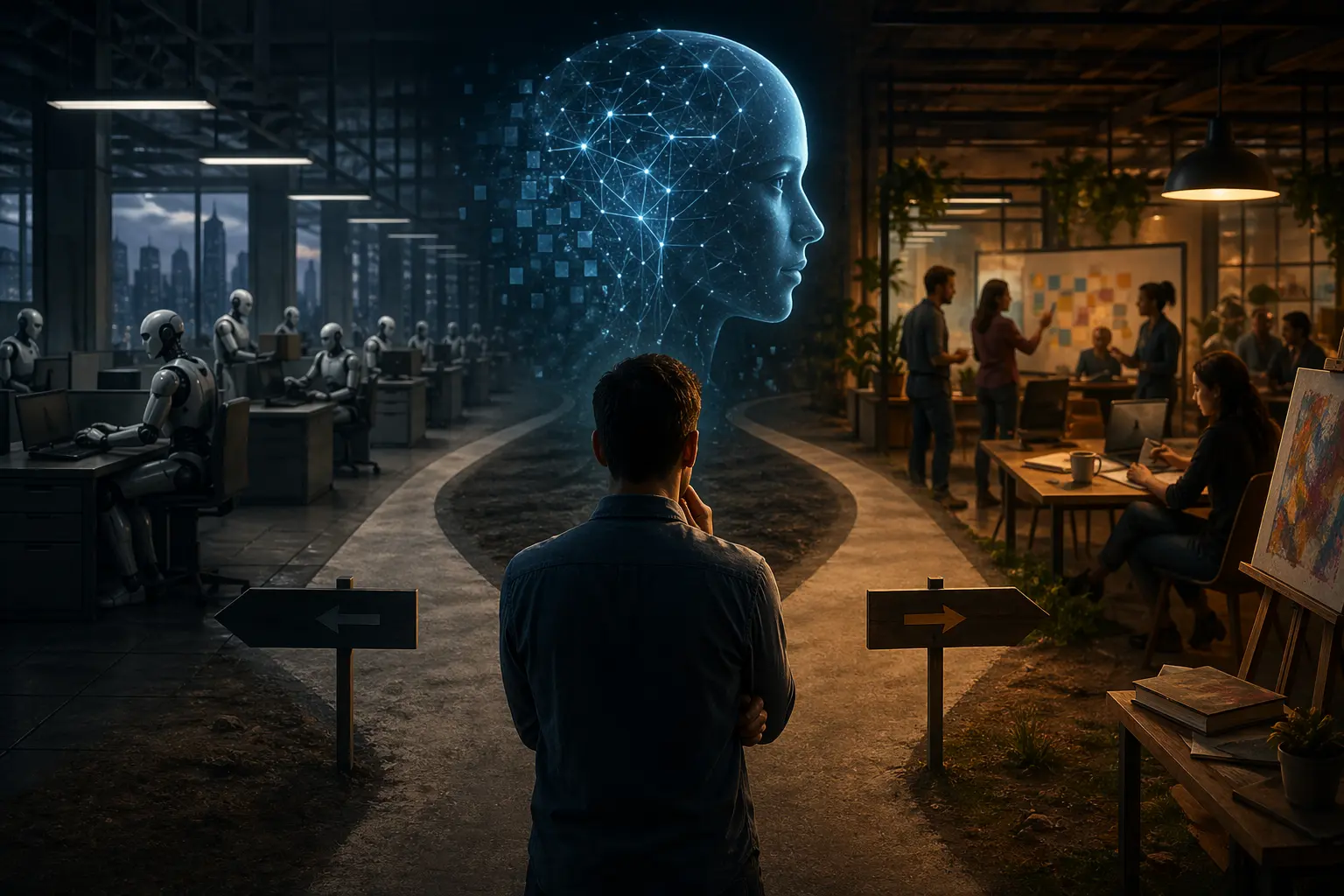
I'll be honest: this question crossed my mind. Not out of insecurity about my work or deliveries, but because it's hard to ignore all the noise. Big techs laying off people en masse, betting heavily on artificial intelligence, and LinkedIn turning into a battlefield between radical optimists and digital apocalypse prophets. At some point, anyone remotely attentive to the market found themselves at this crossroads.
After consuming a lot of content, having conversations, and reflecting, I arrived at a place I'd call realism — neither the "everything will be fine" of those who don't want to think about it, nor the despair of those already updating their CVs fearing replacement by a chatbot.
Let's be honest: AI is not paying for itself yet!
There is a detail worth reinforcing: at the time of this post's publication, the main AI companies (OpenAI and Anthropic) are operating at a loss. The prices they charge for using their products don't cover the costs. There's an implicit subsidy, sustained by investment and expectation, that keeps access artificially cheap.
The question that remains is: when this bubble bursts — and bubbles tend to burst — and the price of AI needs to reflect what it actually costs to exist, which companies will manage to sustain themselves? Which products will survive? This changes a lot of the "AI will replace everything and everyone" narrative circulating out there.

I'm not saying the technology will disappear. I'm saying that the version we have today, accessible and almost magical, may not be exactly what we'll have tomorrow.
The podcast that made me write this vent
Recently I watched the podcast with Fabio Akita on Flow Podcast — almost 5 hours of conversation, the kind you need to pause to process. Two phrases, in particular, stuck with me.
"If you were illiterate with the pen, you'll still be illiterate with the typewriter."
Simple and unvarnished. The tool was never the problem — and it was never the solution. Someone who couldn't organize their thoughts on paper didn't suddenly write better just because they got a keyboard. Technology amplifies who you already are. And there lies both the opportunity and the risk.
"AI reflects who you are. If you never wrote that code to explain things to people, you won't be able to instruct AI either. And then you'll say that AI doesn't do things — but it's you who doesn't know how to use it."
That one got me because it's exactly what I see happening. People frustrated with AI results, thinking the tool is limited, when the real bottleneck is instruction. Knowing how to communicate, structure reasoning, and explain a problem clearly — those skills that seemed "basic" suddenly became core to who can extract real value from artificial intelligence.
AI can do a lot. Silence your voice, it cannot.
I usually tell those who work with me and my direct reports: AI can automate a lot, but it cannot silence your voice.
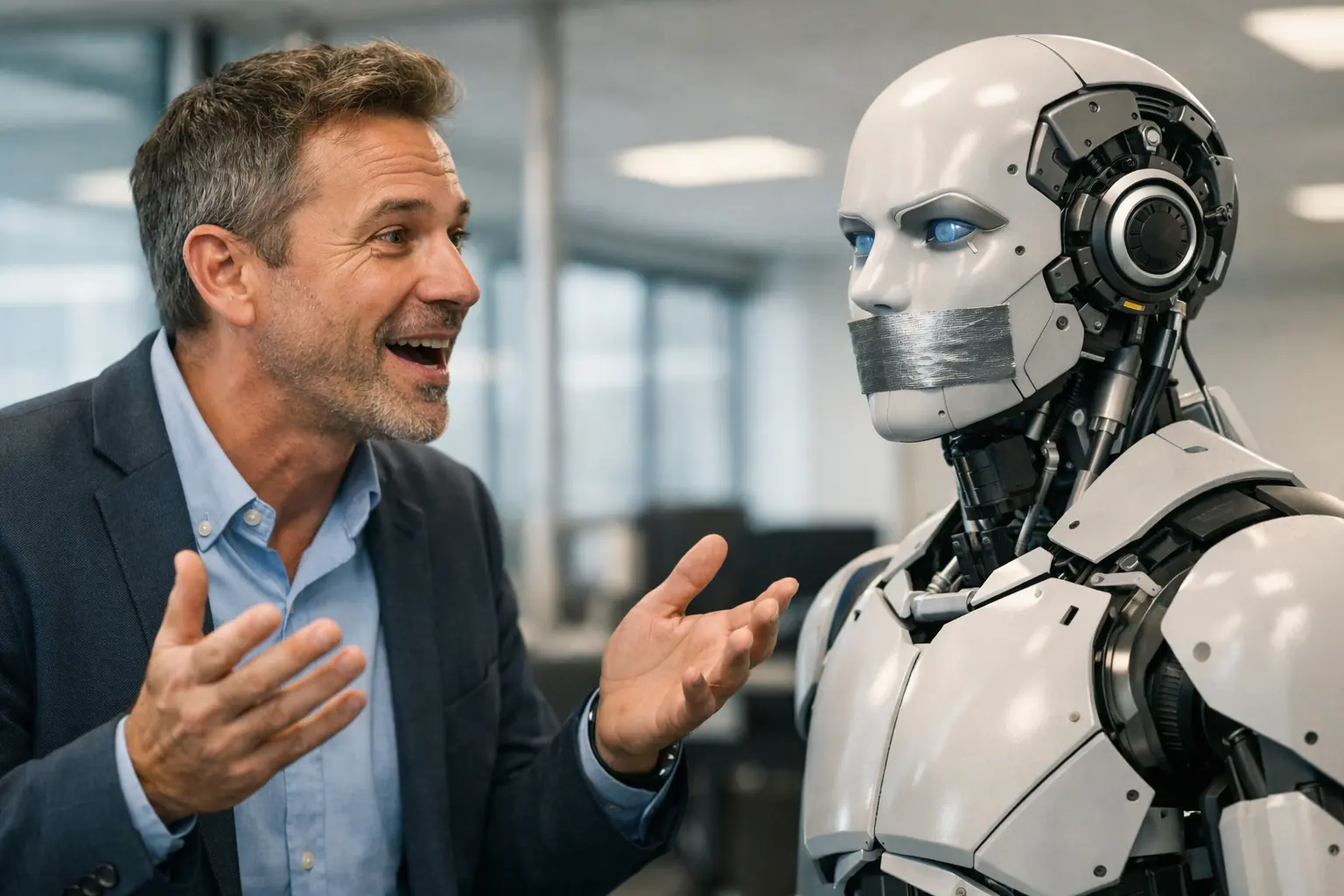
What does this imply in practice? It means your way of seeing a problem, the experience you carry, the connections you make between situations no model was trained to experience — that's not in any dataset. No AI will reproduce the conversation you had with a difficult client and came out with a stronger relationship afterward. No algorithm will capture how you read a room before making a decision.
AI works with patterns. You work with context. And context, most of the time, is what separates a good delivery from one that truly matters.
Also, regardless of your role or function, I continue to believe that there is always space to innovate and improve. Always. Those who stop seeking that space — with or without AI — are the ones at risk of being left behind. Technology may accelerate that process, but the will to evolve still needs to come from you.
I'll be blunt: Will AI steal your job?
It depends. I know that's the most annoying answer possible, but it's the most honest.
If your job is mechanical, repetitive, and doesn't require judgment or context — AI is already part of that, and will increasingly be. Don't close your eyes to that.
But if you think, create, solve problems, communicate, lead, and build relationships — AI is a tool that can make you much more productive. The professional who learns to use it well will likely occupy the space of those who refuse to learn.
What worries me, truly, is not AI itself. It's the herd effect of companies cutting people before understanding what they're cutting, and betting on technology as if it would solve problems that are fundamentally human.
AI doesn't think. It processes. And there is a huge difference between the two — at least for now.
👇 Enjoyed this content?
Share it and keep following my publications.
Take the opportunity to read more articles!